✦ The Soul of Craftsmanship ✦
✦ Handcrafted with love by women artisans ✦
✦ The Art of Detail ✦

The Indian accessory market is full of options today, from factory-made handbags to elaborately handmade potlis by craftsmen and artisans. Often, when you view these items online, most of them seem the same. But when you get to know them in terms of workmanship, raw materials used, endurance, making process, the difference stands out. One of the prominent queries that many buyers face is about handmade bags cost.
To really know the difference between handmade vs machine-made bags India, it is necessary to see beyond just how they look. The issue is not merely about the price; it involves work, durability and worth associated with the hand-crafting. Be it a festive potli or a casual ethnic accessory, understanding each of these bag making is beneficial to a wise purchase.
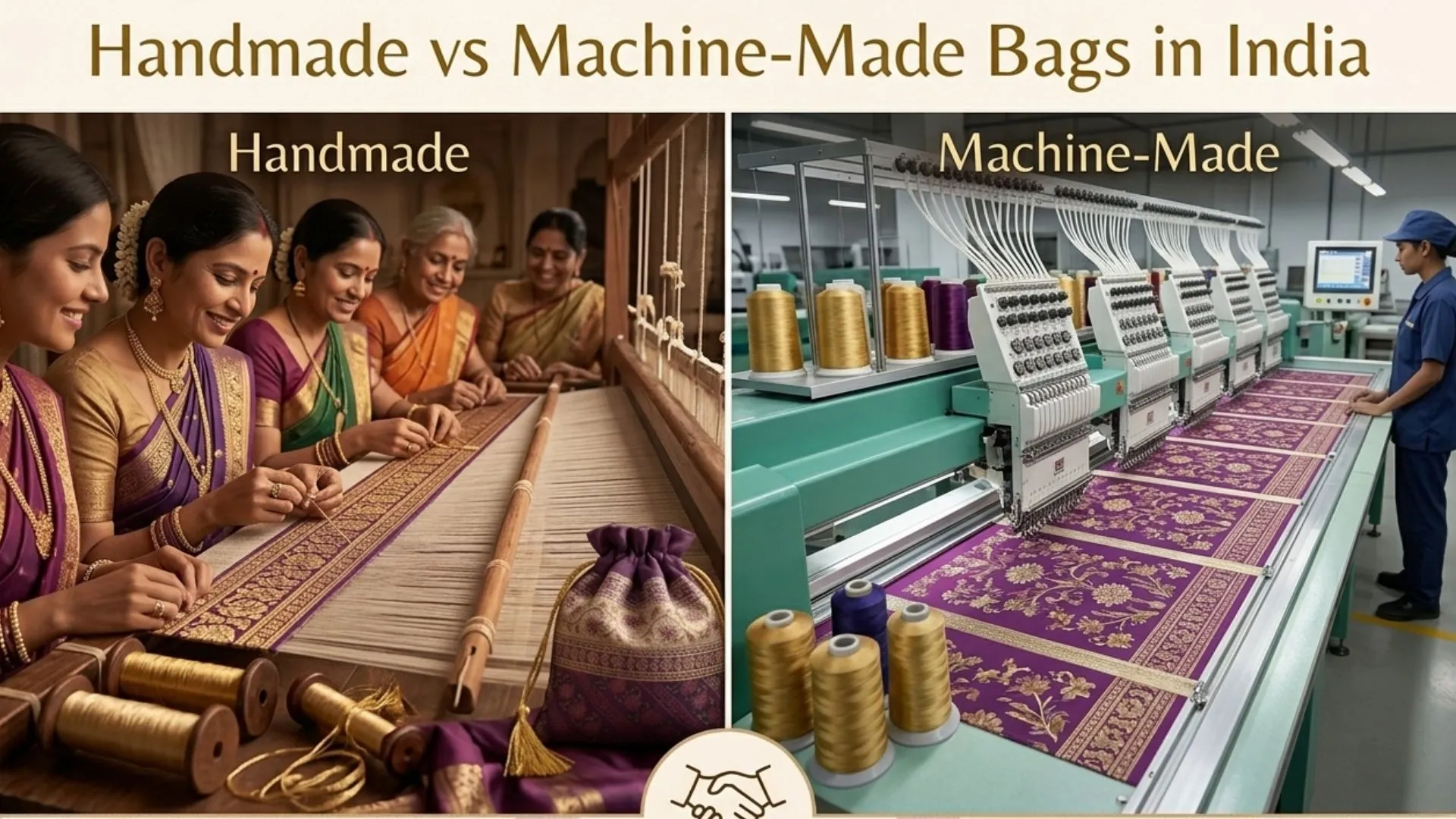
Handmade bags are those which are prepared by hand. These are not mass-produced using automated machines but skillfully made by skilled workers who are involved in all stages of production, like:
In handcrafted potlis, techniques like zari work, bead embroidery, mirror work, and hand block printing are often completed manually. This directly influences the overall handmade potli cost because the process takes significantly more time and skill.
Machine-made bags are produced using industrial manufacturing systems designed for speed and quantity.
This process usually involves:
The goal is efficiency and lower production costs rather than uniqueness or craftsmanship.
Handmade bags often stand out because of:
Since artisans work on each piece individually, there is usually greater focus on precision.
Machine-made bags prioritize consistency and speed.
Advantages include:
However, they may lack the individuality and fine detailing found in handcrafted products.
One of the most searched questions is: Why are handmade bags expensive?
The answer lies in several factors that increase production value.
Handmade bags require artisans with years of experience in embroidery, stitching, and textile work.
Unlike automated systems:
Fair artisan wages directly contribute to the final cost of the handmade potli.
A handcrafted bag often takes significantly longer to produce than a machine-made one.
For example:
Time itself becomes part of the product value.
Handmade bags are frequently used:
These materials are often more durable and visually richer than cheaper synthetic alternatives used in mass production.
Machine-made bags may appear more affordable initially, but long-term durability often differs.
When comparing value over time, handmade bags often justify the higher upfront cost.
A handcrafted bag carries something that machine-made products often cannot replicate: individuality.
Every handmade piece reflects:
This emotional and cultural connection adds another layer of value beyond functionality.
The discussion around handmade vs machine made bag India also connects to sustainability.
Handmade production often supports:
Machine-made production focuses more heavily on volume and speed, which can contribute to higher waste generation.
The right choice depends on your priorities.
Both have a place in the market, but understanding the difference helps set realistic expectations.
The difference between a handmade potli bag and a factory produced polti bag carries a lot deeper than the price of these potlis. Actually, both of these bags demonstrate a different manufacturing strategy throughout the world of fashion. When it comes to machine-made bags, the focus is on cost-effectiveness and volume, but when it comes to handmade bags, the quality and every minute detail in the bag is paramount. Once the customers know what the factors are that influence the handmade potli costs, it helps them understand the work, skill and resources to produce each bag.
For fashion accessories that blend traditional art with the element of handcrafted design, browsing through the collection of handmade potli bags at Kirat Tjori will enable you to come across beautifully designed pieces that value durability, cultural authenticity and a level of detail machine-made alternatives simply lack.
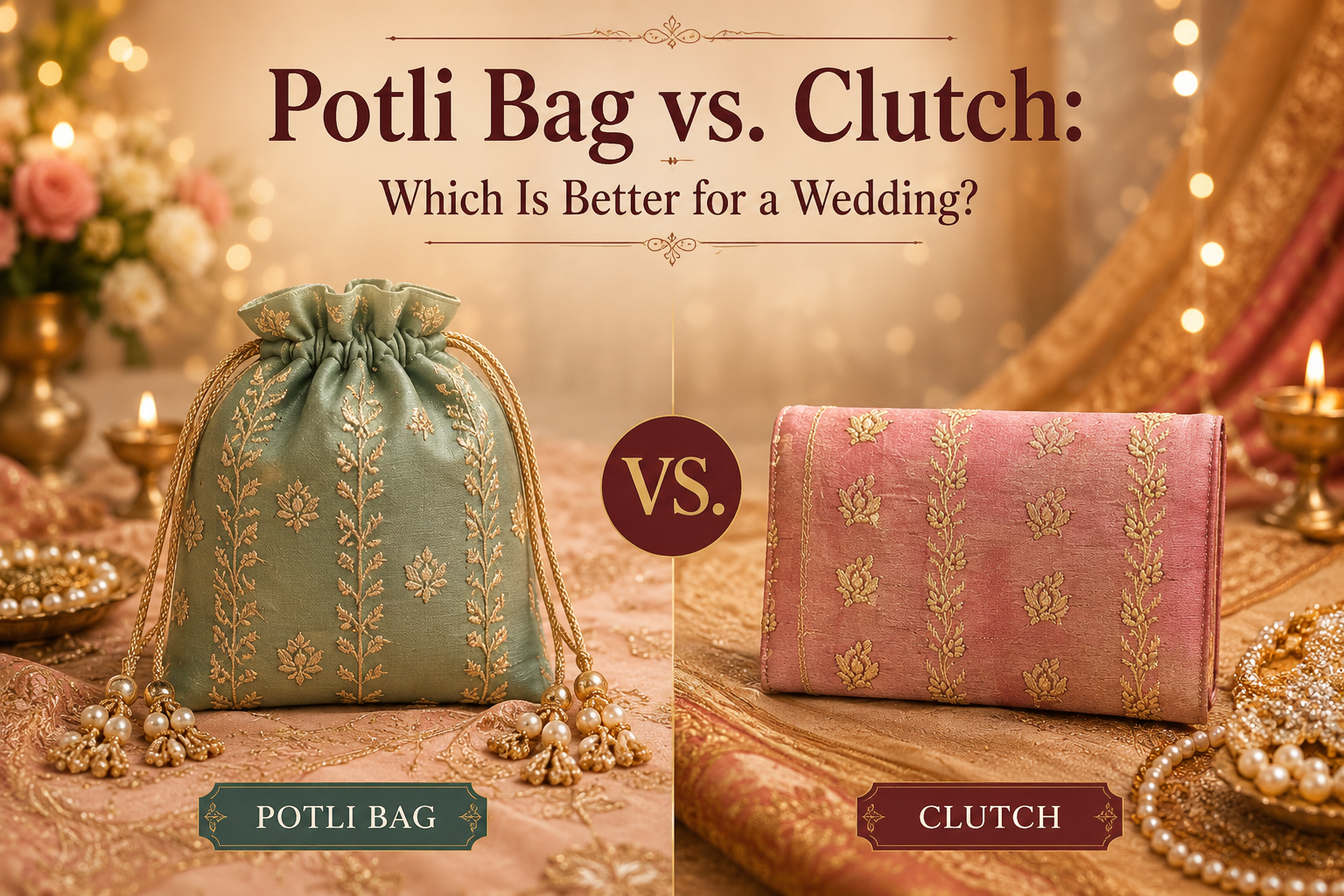
Choosing a wedding bag seems like such a minor choice until your outfit is ready
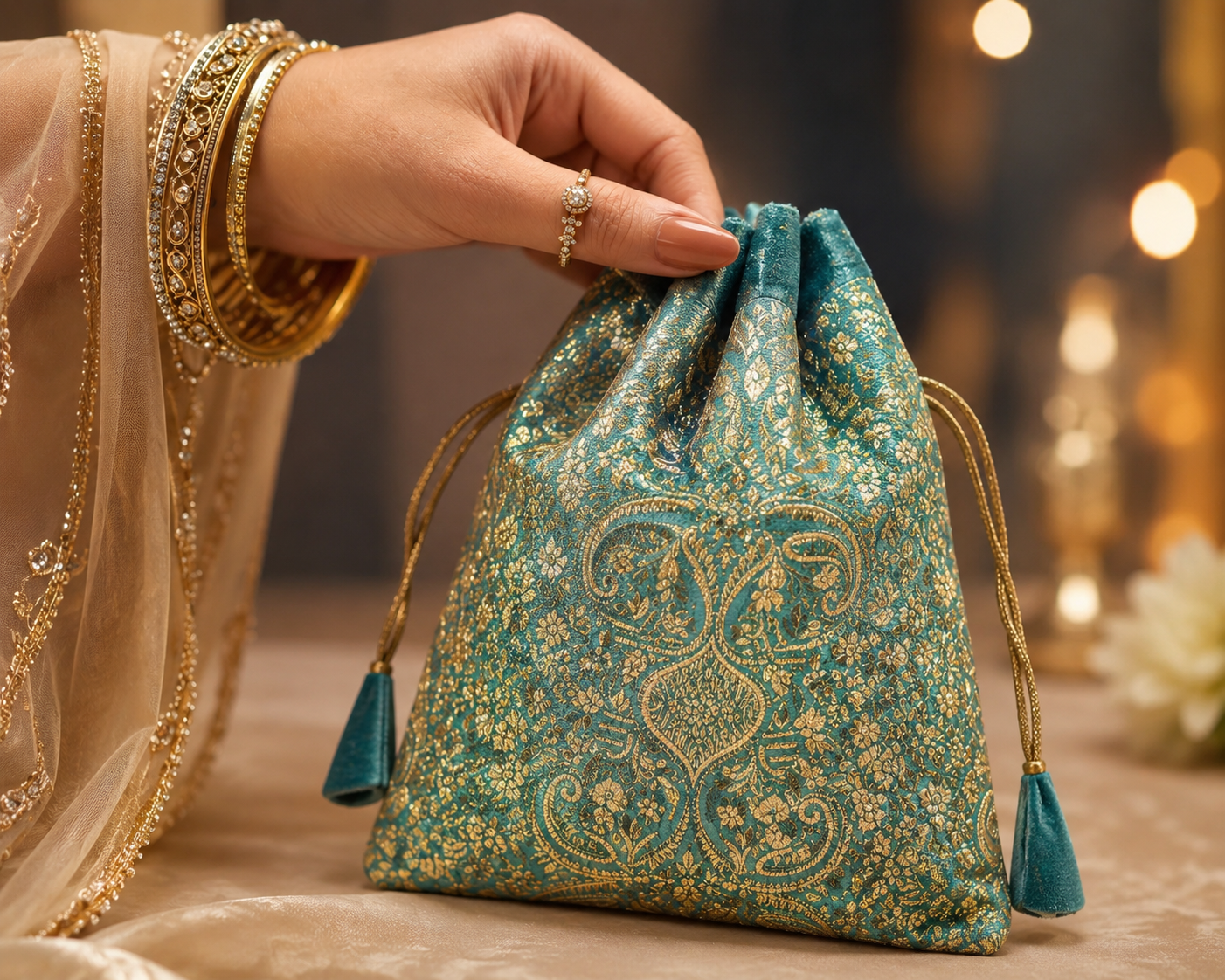
The right designer potli bags should not be a competition to your lehenga. For those

Your bridesmaids do so much more than pose alongside you for photos. They are generally

Indian weddings are not a single-day affair. The haldi can be in the morning, the
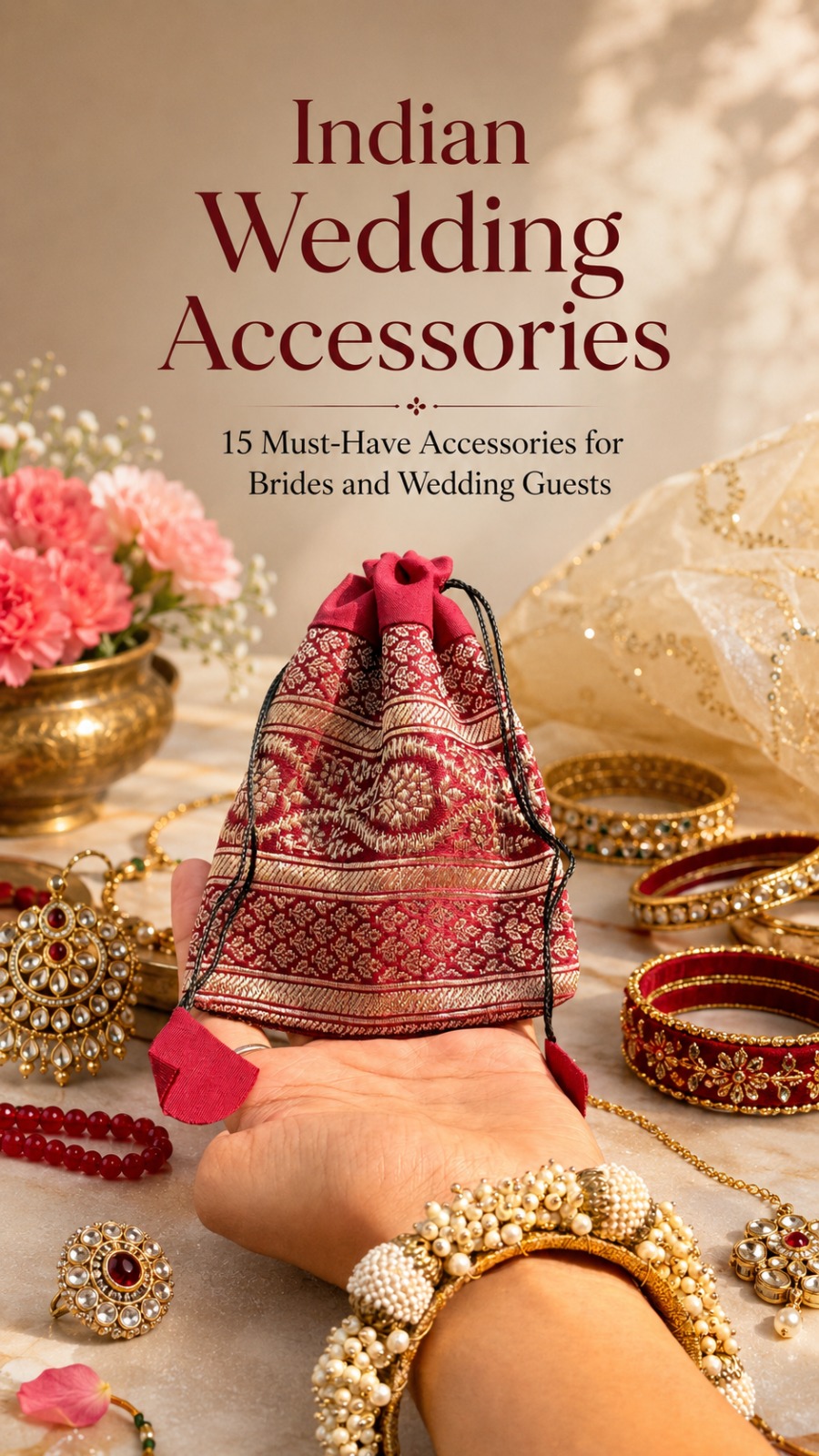
While an Indian wedding can be about a lot more than just what you wear-

Handcrafted Potlis from India are proving to be a hit with boutiques and gift companies,