✦ The Soul of Craftsmanship ✦
✦ Handcrafted with love by women artisans ✦
✦ The Art of Detail ✦

Demand for a Genuine Handmade Potli Bag could be increasing because it has become a trend. But in a way, this has worked against the customer. As the demand increases and the supply seems to be slow, it appears that the market has already become overcrowded with factory-produced pieces, which simply imitate the traditional work without really being able to replicate the quality, craftsmanship or the authentic touch that handmade goods possess.
The most disturbing aspect is that at first sight most of these items appear to be nearly identical when viewed on the web and it becomes a difficult task to distinguish between an artificially created piece of work and a genuine handcrafted one. Therefore, if anyone decides to buy an authentic Indian handicraft bag, then it becomes important for them to understand the distinction between a copy and a genuine handmade potli.

The machine-made potli bags do not have the personal touch and customisation that the handcrafted potli bag carries. The handmade potlis are created and designed with utmost attention to every detail at all stages, while the factory-made production will have hundreds of similar products made in a span of a short period.
Right from embellishment to embroidery, from stitching to finishing every detail, the artisans work on the potli bags carefully on each piece. This also creates a subtle and slight variation that makes every bag unique.
So, if you are deciding to buy a Genuine Handmade Potli Bag, then you will be investing money in something that will be a pure reflection of human skills rather than automated production.
One of the clearest indicators of authenticity is the embroidery work.
Handcrafted embroidery often includes:
These small differences are not flaws. In fact, they are often proof that the work was completed by hand.
Factory-produced bags usually feature:
If every detail appears too precise and repetitive, the bag may have been machine-produced.
The fabric used in a potli bag can reveal a great deal about its authenticity.
Many artisan-made potlis use materials such as:
An authentic Indian handicraft bag should feel and look way more richer, tougher, and a bit more sophisticated too, compared to that mass-produced bag, which is often put together from cheap synthetic stuff.
The quality of the work begins with what material is used in the first place. If that foundation is weak, everything else just falls apart.
This is the part of the bag that is often forgotten by the prospective buyer. The buyer needs to keep in mind the following:
Artisans pay attention to the entire construction process, not just the visible decorative elements.
Poor finishing inside the bag can sometimes indicate mass production.
One of the biggest misconceptions about handmade products is that they should look flawless.
In reality, slight differences in:
are often signs of genuine craftsmanship.
A Genuine Handmade Potli Bag reflects the work of human hands, and those subtle variations are part of its character and charm.
Handcrafted bags often feel different when held.
Because they typically use:
The overall feel of the bag can often reveal more than photographs alone.
Authentic handcrafted brands usually take pride in their process.
A reliable seller often provides information about:
Transparency is often a very strong sign that the brand genuinely values true craftsmanship. This is recognised only when one goes for an authentic Indian handicraft bag.
In case there is very little information mentioned about the potli bag you have selected, then it is worth doing some more detailed investigation about the product.
Price is not the only factor that determines authenticity, but it can provide useful context.
Creating a handcrafted potli involves:
As a result, a Genuine Handmade Potli Bag cannot usually be produced at the same cost as a factory-made copy.
Extremely low prices may indicate shortcuts in materials, labour, or production quality.
When shopping online, photographs become your primary source of information.
Look for:
High-quality product images often allow you to evaluate the craftsmanship before making a purchase.
Generic images or heavily edited photographs can make it harder to assess authenticity.
Customer reviews often reveal details that product descriptions do not.
Pay attention to comments about:
Consistent positive feedback regarding these factors can help confirm that the bag is genuinely handmade.
Buying a handcrafted potli is about more than aesthetics.
It helps support:
Every purchase contributes to keeping these skills alive in a market increasingly dominated by mass production.
Choosing a genuine handmade potli bag does require a keen eye for certain aspects, but it is always worthwhile in the end. Every small detail, from the stitching and quality of fabric to the finishing and the artisan’s honesty, is essential when detecting if a bag is really handmade, or just made to seem so.
Purchasing an authentic Indian handicraft bag means opting for craftsmanship and culture over mass production and conformity. If you are in search of handmade potli bags with fine detailing and traditional artistry for your contemporary wardrobes, check out the elegant designs that celebrate handicraft at Kirat Tjori!
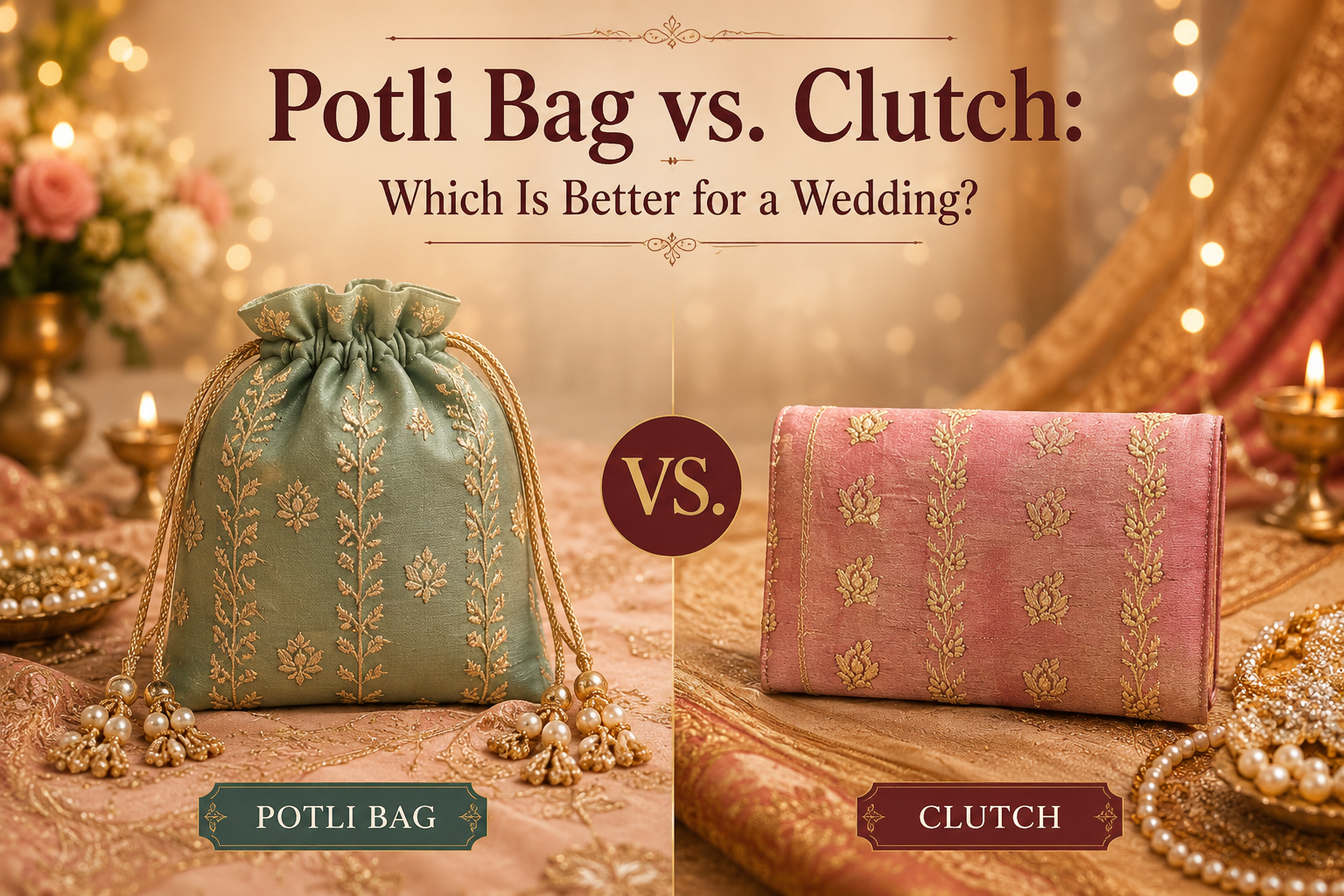
Choosing a wedding bag seems like such a minor choice until your outfit is ready
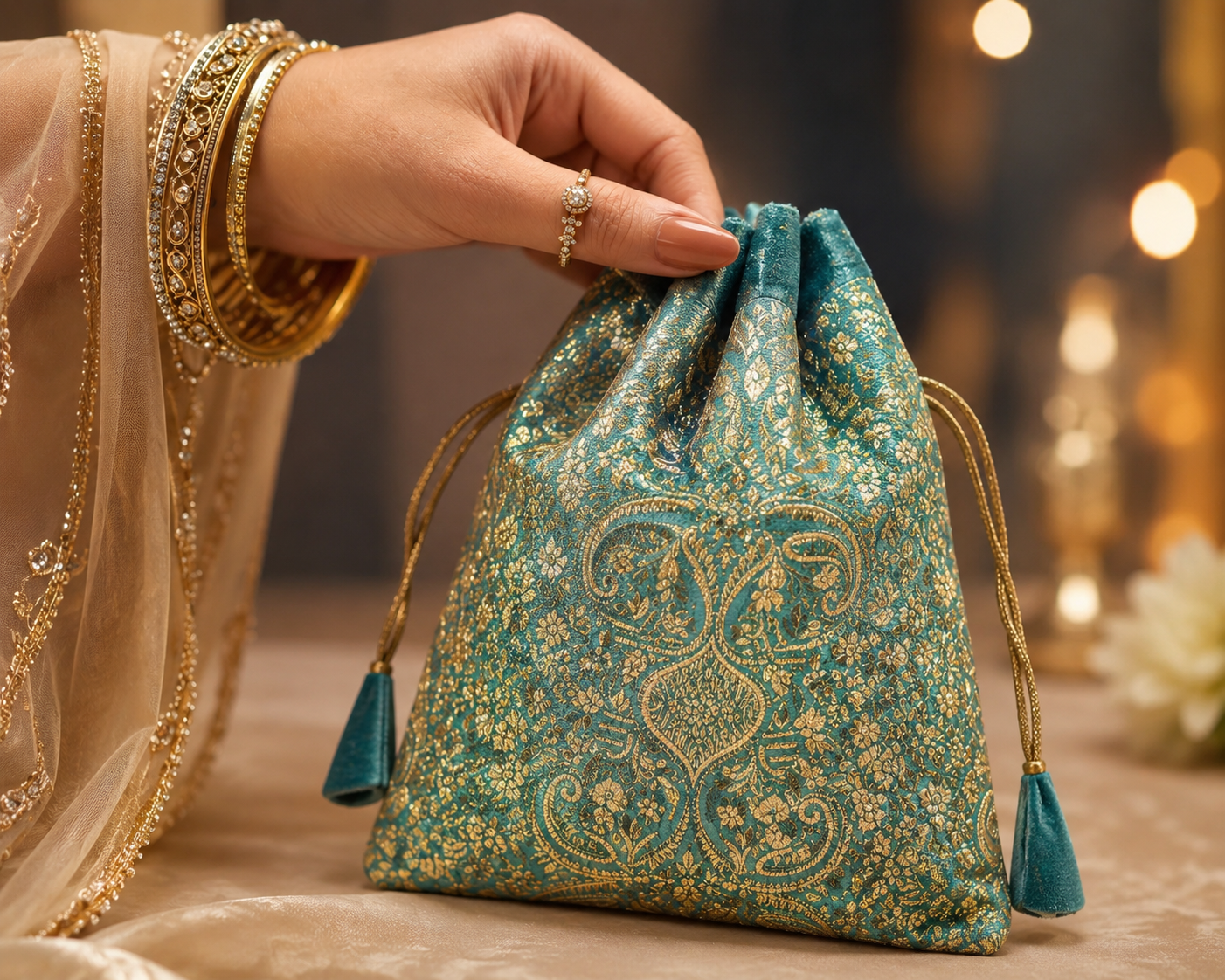
The right designer potli bags should not be a competition to your lehenga. For those

Your bridesmaids do so much more than pose alongside you for photos. They are generally

Indian weddings are not a single-day affair. The haldi can be in the morning, the

While an Indian wedding can be about a lot more than just what you wear-

Handcrafted Potlis from India are proving to be a hit with boutiques and gift companies,