✦ The Soul of Craftsmanship ✦
✦ Handcrafted with love by women artisans ✦
✦ The Art of Detail ✦

A handcrafted potli bag is one of the most preferred options by individuals because of its detailing, story and texture, rather than opting for mass-produced accessories. The processes followed to create a Potli bag at Kirat Tjori are not just about the production of the end product. The artisan made bags India are created keeping in mind the hard work of artisans, helping in preserving the craft and also building something that has a purpose and is aesthetic at the same time.
Every handicrafted potli bag made by Kirat Tjori goes through a series of executed stages where the design meets skilled craftsmanship. So if you have ever wondered about how a potli comes to life, then this blog is a clear breakdown of the journey from raw fabrics to a finished piece.
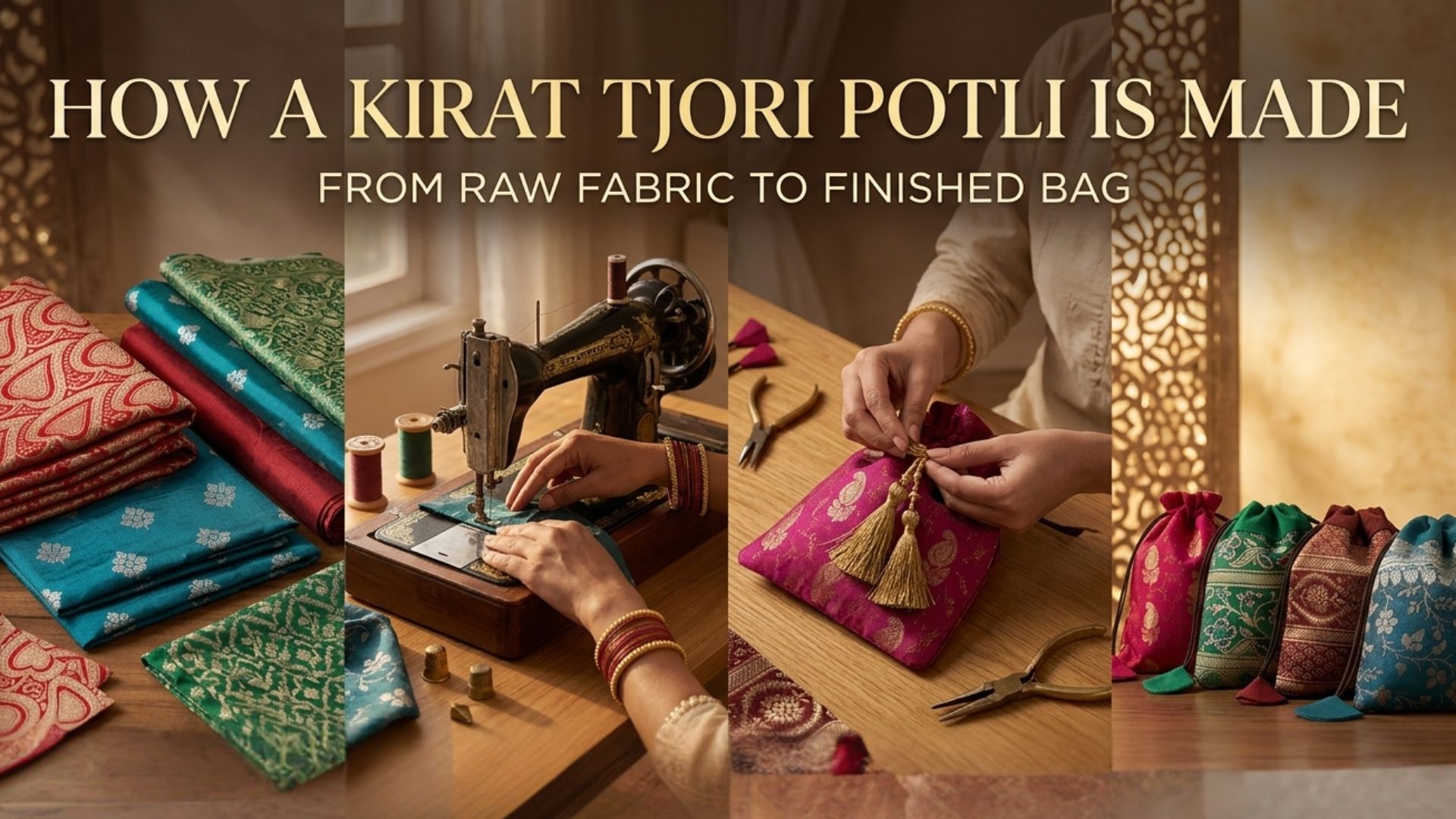
The first initial stage of making artisan made bags India begins with the process of selecting the base materials. The choice of the fabric decides both the durability and the look of the potli bag.
At this initial stage, the core focus is on the texture and quality of the material, while also making sure of how well the fabric can hold the designs and embellishments.
Every potli is made with the intent to design and start production as soon as possible. So, this is the stage where the conventional methods meet the modern styling.
This stage is where the visual appeal and practical aspect of the handicrafted potli bag are decided.
Once the design, colour and fabric of the potli bag are decided, the whole detail and material are then passed on to the skilled artisans. This step in the process of making a Potli bag is very important and the most detailed part of the entire process.
This is step is one of the most important steps in the artisan-made bags India is known for. Each piece of the potli bag is a reflection of the artisan’s skill, which helps in making no two pieces the same.
The fabric is properly and precisely cut and shaped once the process of embellishment is over.
This stage in the production of the potli bag is important because it helps in making sure that the potli bag looks good and also holds it positions after many years of usage.
The cut pieces are then stitched together with attention to detail.
This is where the potli begins to take its final form as a usable accessory.
Before the potli is ready, it goes through a finishing process.
These small details define the quality of a handmade fabric bags ethical approach, where finishing is as important as design.
Every potli undergoes a quality check before it reaches the customer.
This step reflects the standards expected from an Indian artisan handbag brand that values both craftsmanship and customer experience.
Making a potli is not rushed. It follows a slower, more deliberate approach compared to factory production.
Each potli carries the effort of multiple hands and the intent of thoughtful design.
A handcrafted potli bag from Kirat Tjori is not just an accessory. It is the end product that is achieved by following a detailed step- by-step process that starts with raw fabric and ends with a beautiful end-product. Right from sourcing the raw materials, deciding on the artisan-led embellishment, to finally having the quality checks of the Potli Bags, every stage is a reflection of the commitment to authenticity and craft.
So if you are thinking of buying a potli bag as an accessory that blends durability, design and an ethical production, then exploring the various Kirat Tjori’s collections will help you in owning a product that is a reflection of the true essence of artisan-made bags India, while also providing support to a more conscious approach to fashion.
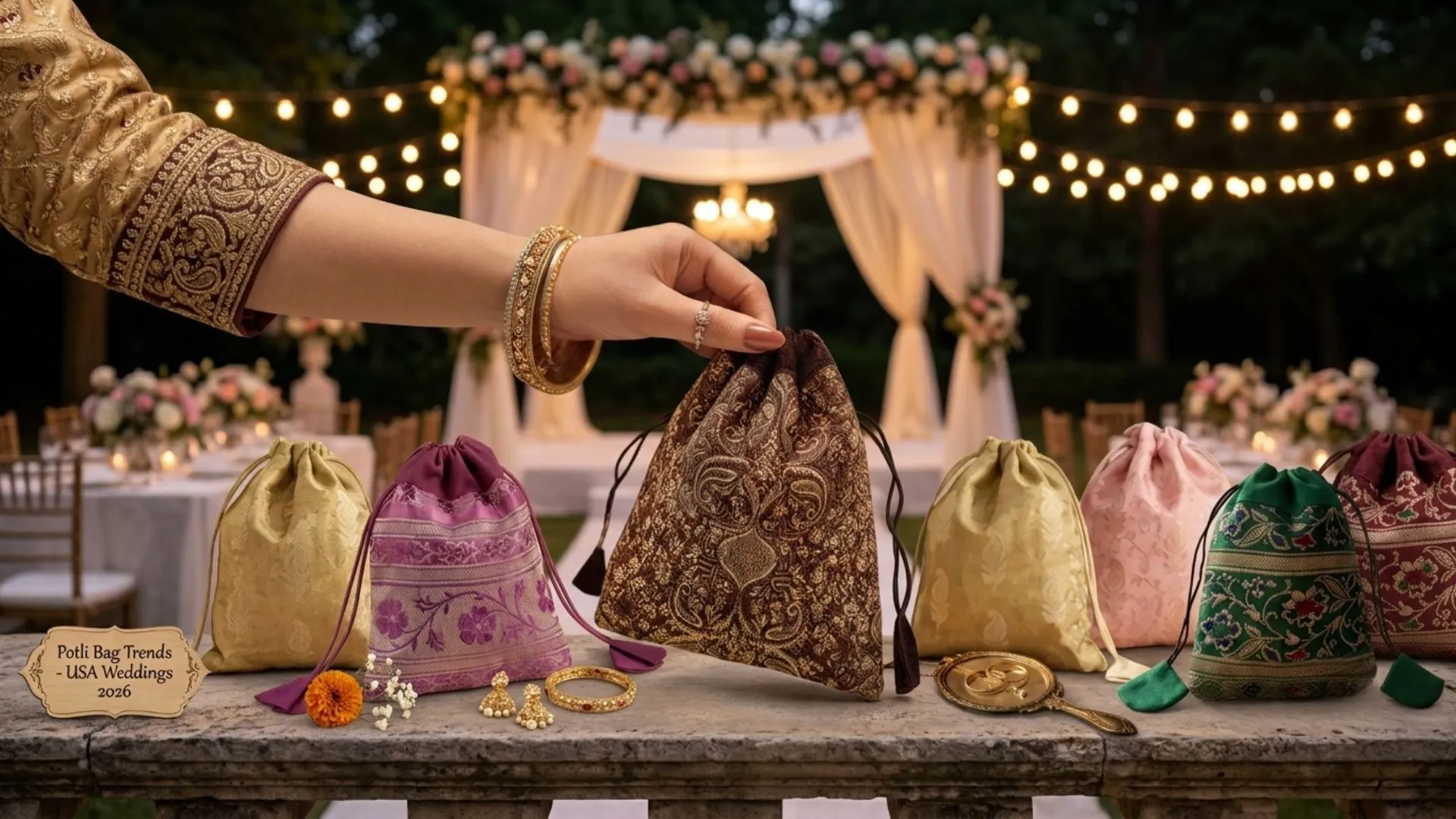
The Potli bag trends has increasingly become popular in the USA for the past few
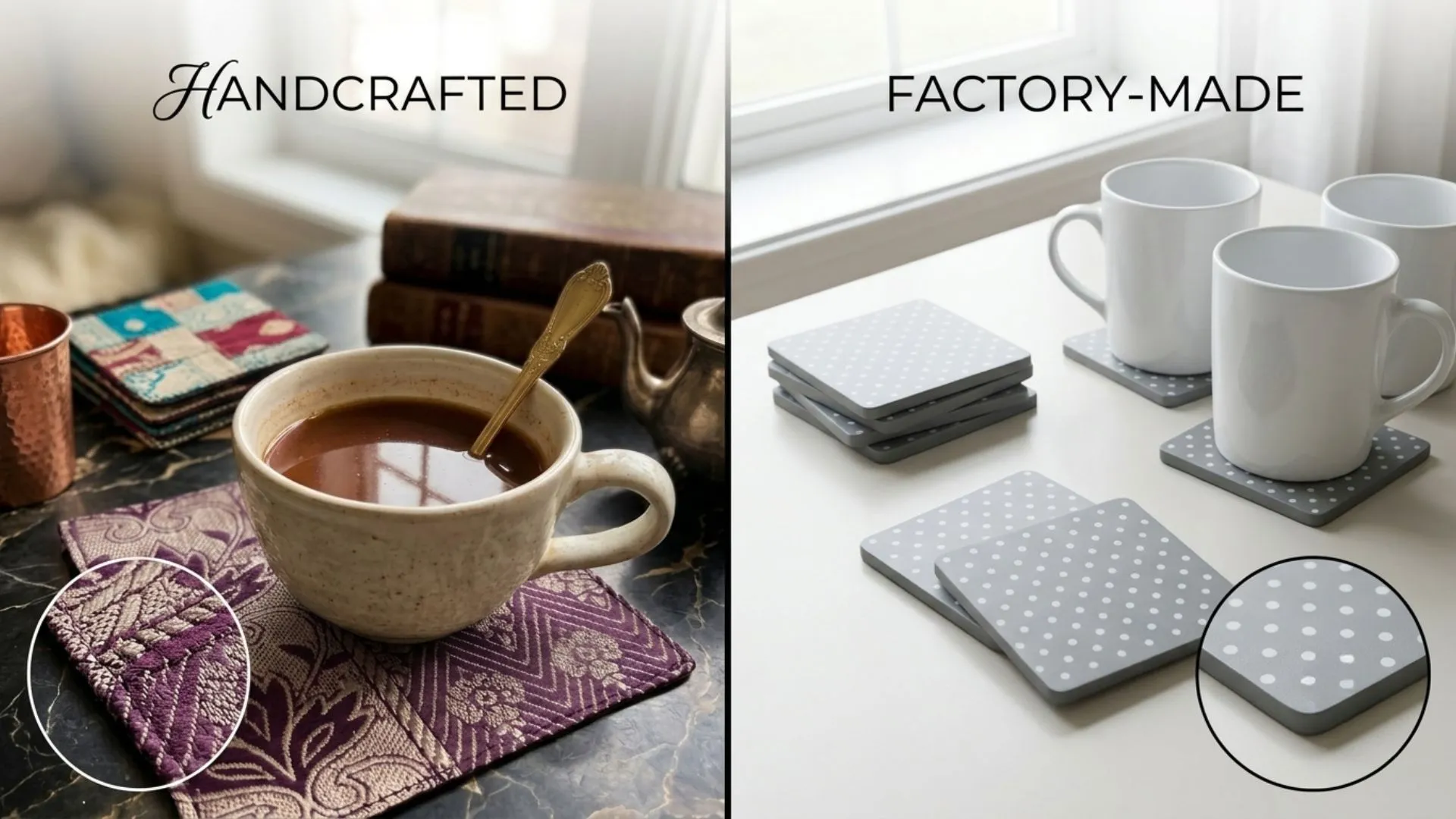
When you are looking for table decorations for coasters, it’s easy to think of all
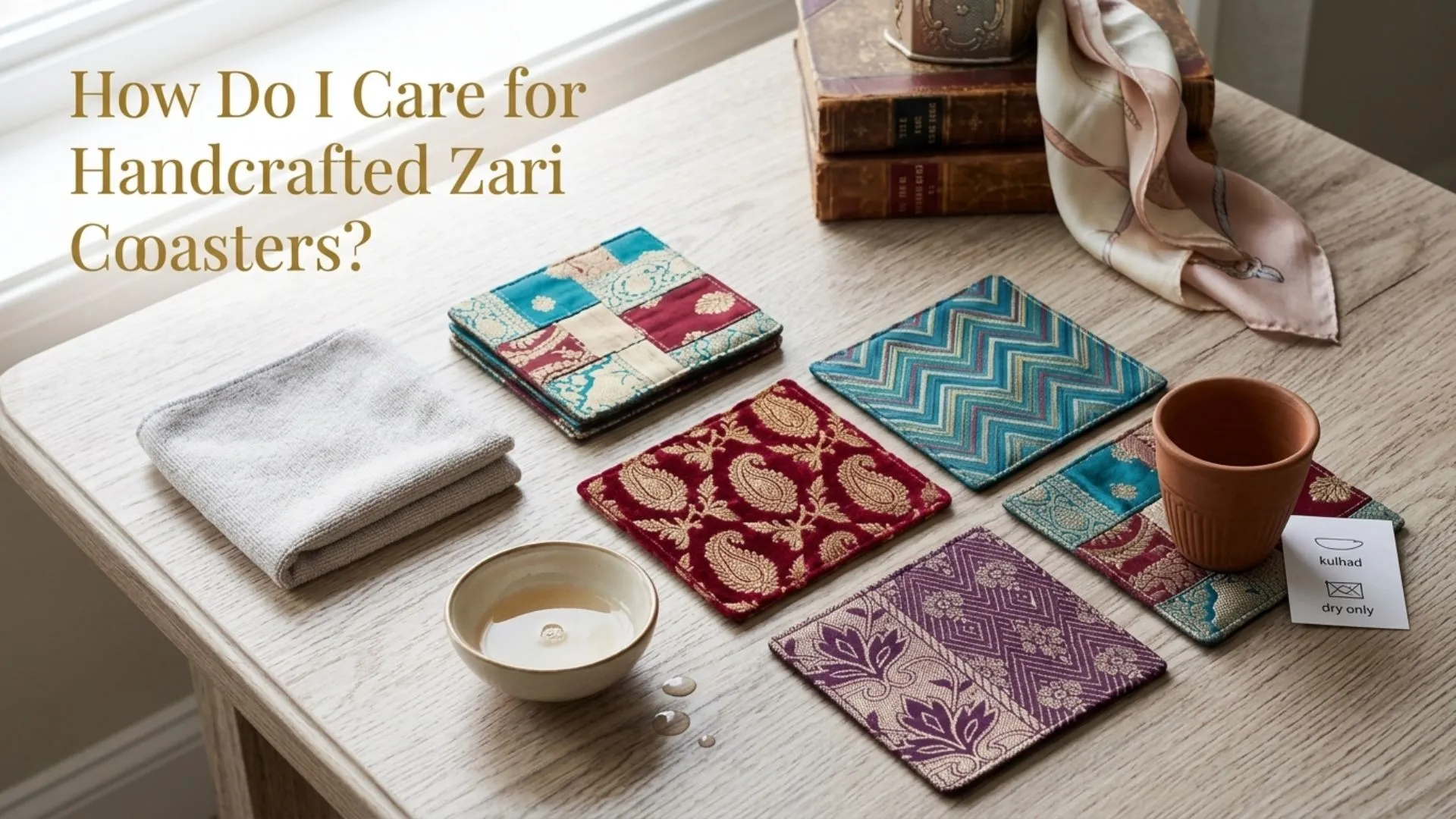
A table can be made to look more elegant with a beautiful set of handcrafted
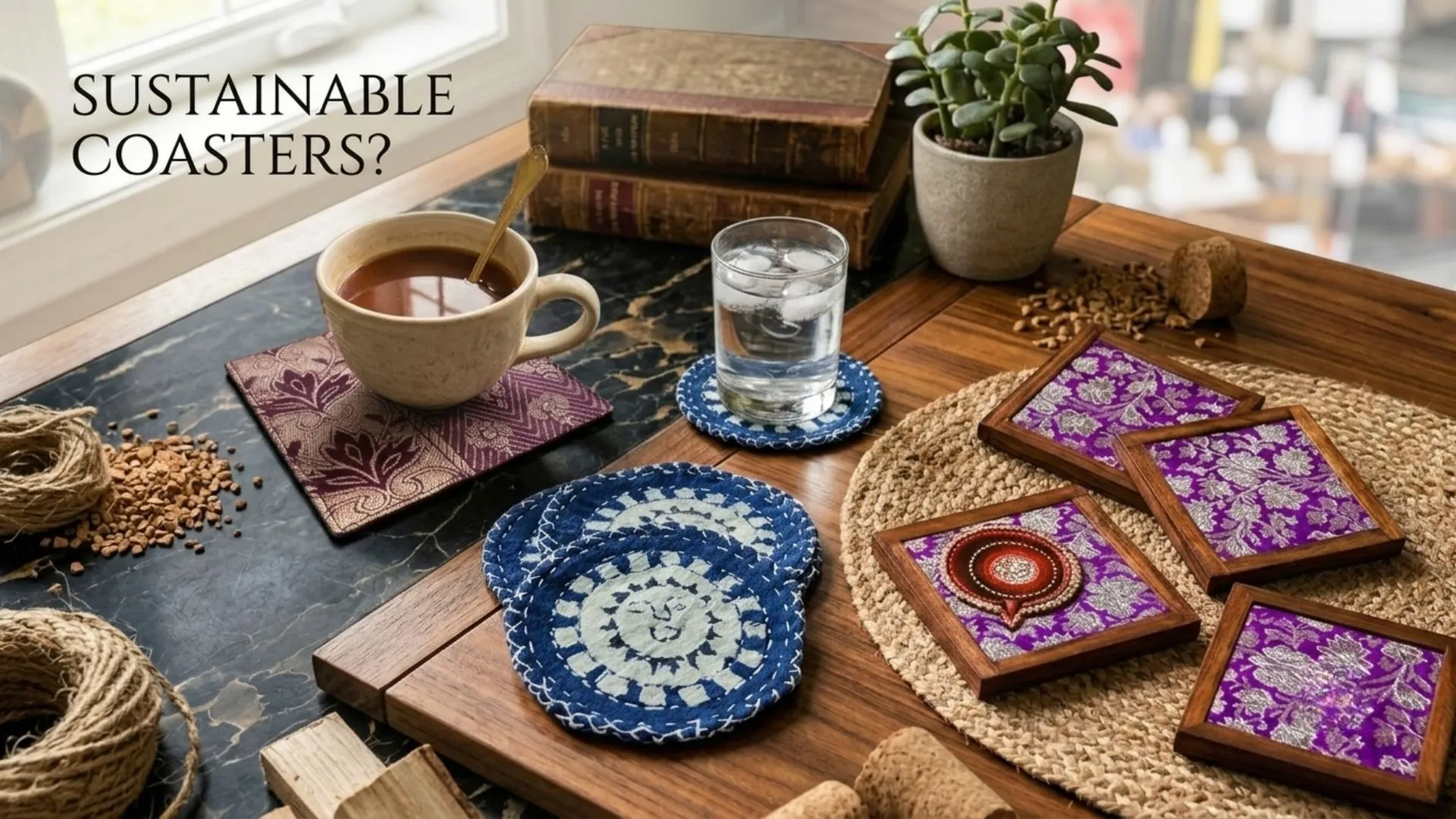
Small choices are often the factors behind the customer’s shifting their preferences to sustainable living.
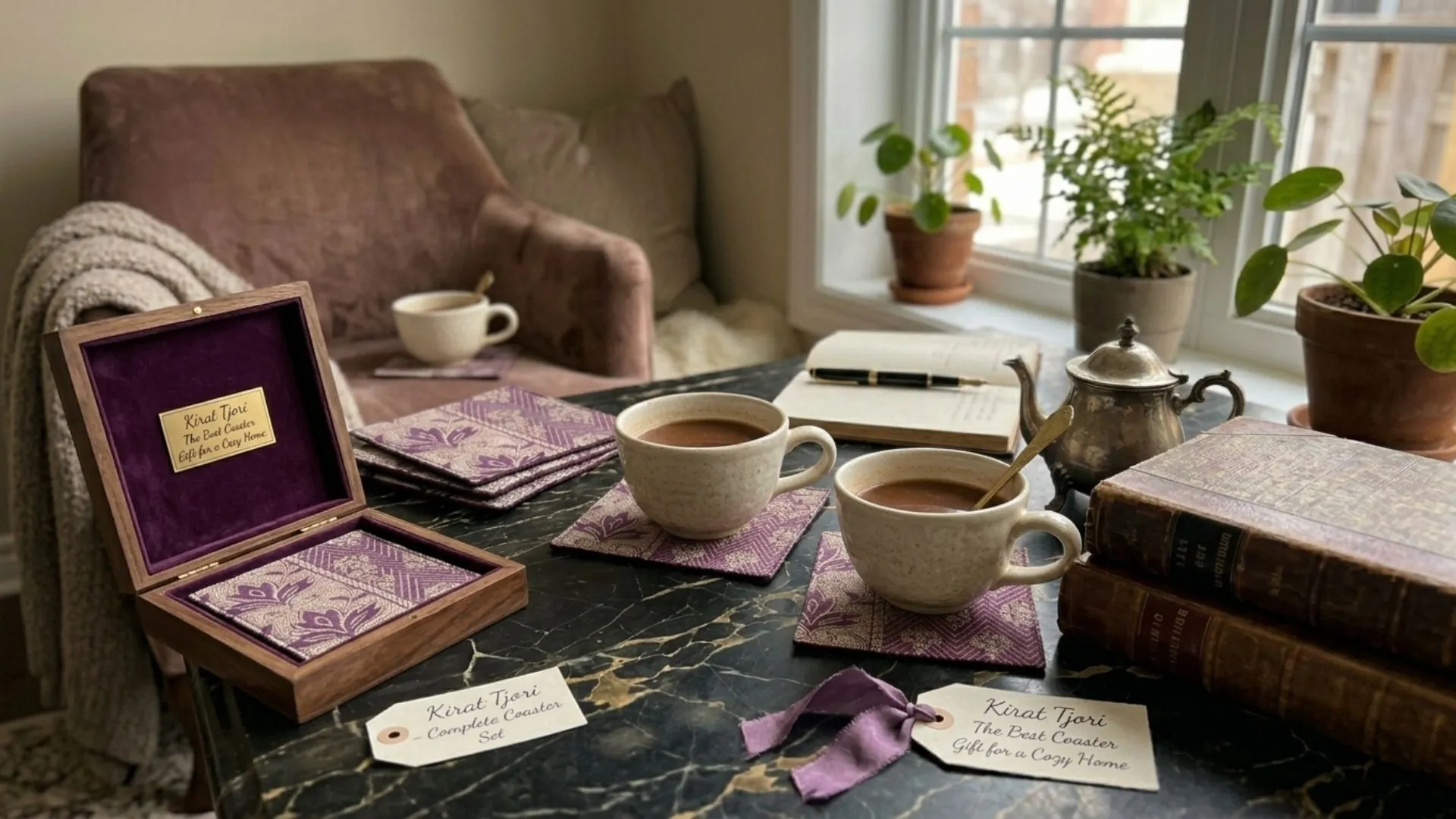
The handcrafted coasters have two functions. First, they offer an element of protection by protecting
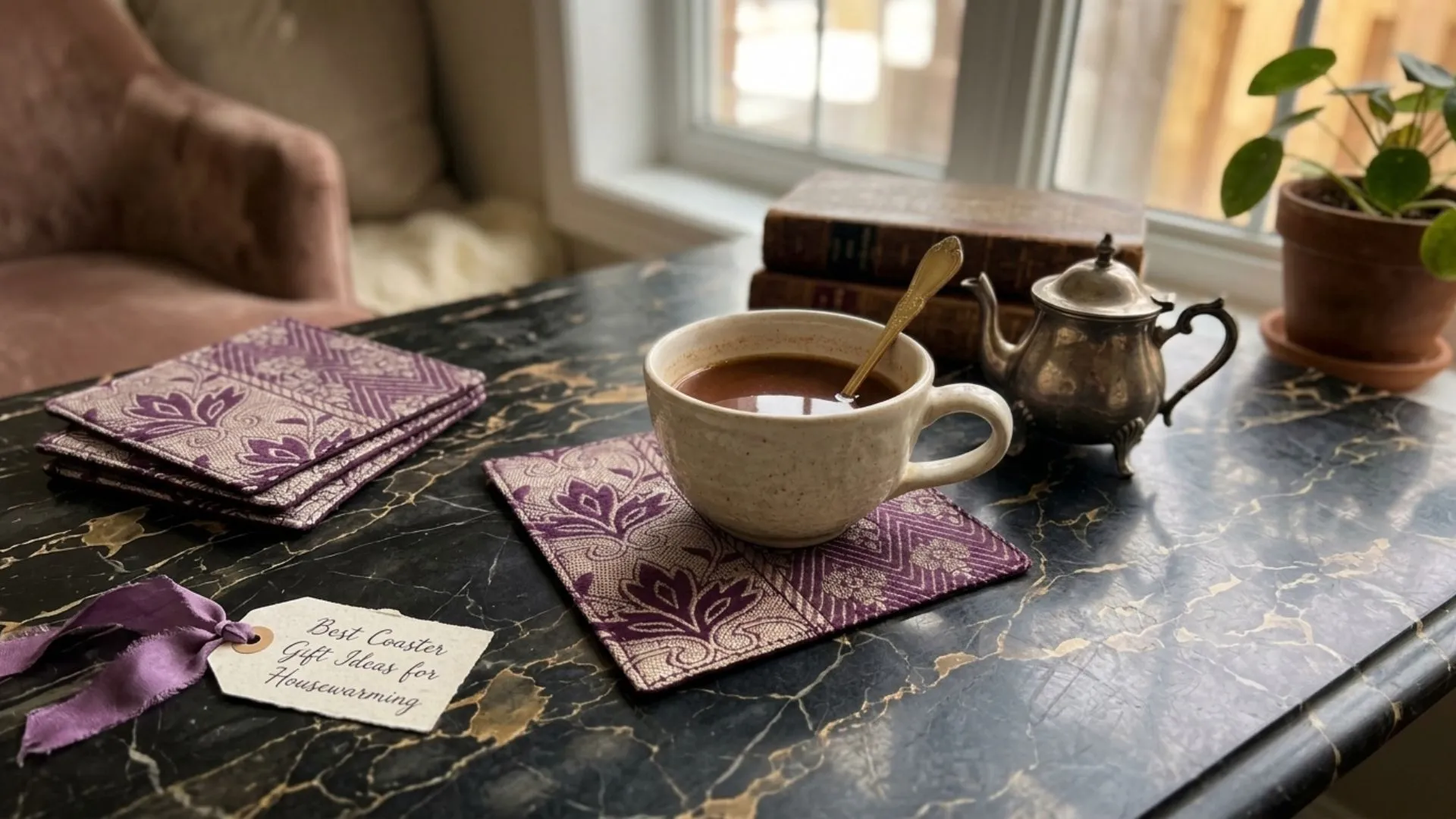
The first house purchase, the new city or the first flat, whatever new phase of